The Egyptian novel is, by common consent, the centre of gravity of modern Arabic fiction. The form took root in Cairo and Alexandria in the late nineteenth century — Muhammad Husayn Haykal's Zaynab (1913) is conventionally cited as the first true Arabic novel — and matured in the second quarter of the twentieth century, when a generation of writers around Tawfiq al-Hakim, Yahya Haqqi, and the young Naguib Mahfouz began producing fiction that could carry the full social weight of an Egyptian century.
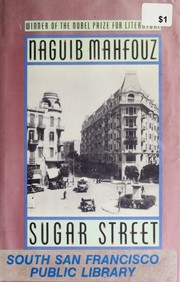
Mahfouz's Cairo Trilogy (1956–57) is still the centre of any discussion of the form. After Mahfouz, the Egyptian novel split into several streams: the documentary realism of Sonallah Ibrahim, the village psychology of Yusuf Idris, the historical-political fictions of Radwa Ashour, and — in the 2000s — the wide-screen social novels of Alaa Al Aswany and the Tahrir-era memoirists.
Egyptian fiction is also the most widely-translated stream of Arabic literature in the world. The American University in Cairo Press in particular has been responsible for bringing dozens of Egyptian novelists into English over the last forty years, and the Booker-affiliated International Prize for Arabic Fiction has gone to Egyptian writers more often than to writers from any other country.
For readers new to Egyptian fiction, the standard starting points are Mahfouz's Midaq Alley or the first volume of the trilogy, Palace Walk; Yusuf Idris's The Cheapest Nights; Sonallah Ibrahim's That Smell; and Bahaa Taher's Aunt Safiyya and the Monastery. From there, the tradition opens out in every direction.