The Levantine short story is the second great regional tradition of modern Arabic fiction, after the Egyptian novel. From the Mahjar writers in early twentieth-century New York — Khalil Gibran, Mikhail Naimy, Elia Abu Madi, Amin Rihani — through the Beirut-based generation of the 1950s and 60s and into the war and post-war fiction of Elias Khoury, Hanan al-Shaykh, and Hoda Barakat, the Levant has consistently produced the most formally adventurous prose in Arabic.
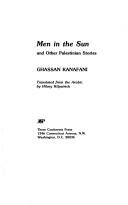
Syria's contribution has been disproportionate. Zakaria Tamer is the master of the very short fable; Mohammed al-Maghout the master of the prose poem; Hanna Mina the foundational Syrian novelist of the working class. Palestine, since the 1948 catastrophe, has produced a literature explicitly in service of national memory — Ghassan Kanafani, Sahar Khalifeh, Mahmoud Darwish.
Lebanon's civil war (1975–1990) became, paradoxically, the engine of an extraordinary postwar fiction. The short story and the novella are the dominant forms — perhaps because the war made any larger architectural ambition impossible to sustain — and the resulting literature is stylistically restless, often unreliable in voice, and obsessed with how memory survives violence.